

Workforce planning is often an annual budgeting exercise—a scramble to fill roles based on headcount targets disconnected from daily operations. This guess at future needs fails to account for shifting project demands, employee turnover, and new technology. The work is not just filling seats; it is building an adaptive system.
Effective workforce planning strategies move a company from reactive hiring to a deliberate, data-informed model. This means understanding what skills are required, where they are needed, and how to develop or find them. For IT and organizational leaders, this shift is the difference between having a team that meets current demands and one prepared for future opportunities.
This article outlines seven workforce planning strategies. It explains each one's function and provides KPIs to track progress and steps for implementation. It also details how privacy-first endpoint analytics provide the operational data needed to measure what is happening, turning plans into measurable actions. The goal is a clear framework for building a resilient, capable workforce.
1. Headcount Planning and Forecasting
Headcount planning and forecasting is a foundational exercise. It moves beyond simple projections, like adding a flat percentage to last year’s staff numbers. It involves creating a model that predicts staffing needs based on business objectives, product roadmaps, and historical data like turnover.
The goal is to set realistic headcount targets and hiring timelines tied to strategic goals. This prevents scrambling to fill roles at the last minute. A planned 20% revenue increase doesn't automatically mean a 20% headcount increase. A forecast might show that engineering needs a 30% staff increase to build new product features, while marketing only needs a 10% boost for the launch.
Why this is a key workforce planning strategy
Without a solid headcount forecast, resource allocation is a guessing game. A data-driven plan provides a defensible reason for budget requests and helps align recruitment with the most important business needs.
Implementation Steps
- Gather Data: Collect historical data on turnover rates, hiring cycle times, and growth from the past three years.
- Align with Business Goals: Meet with department heads to understand their objectives and project pipelines for the next 12-24 months.
- Model Scenarios: Develop best-case, worst-case, and most-likely scenarios for growth to understand potential hiring needs.
- Translate to Roles: Convert growth targets into specific roles. A new product launch might require two senior developers, one quality assurance engineer, and a product marketing manager.
- Review and Adjust: Revisit the forecast quarterly to adjust for market shifts, project delays, or accelerated growth.
Key KPIs:
- Forecast Accuracy (Actual vs. Planned Headcount)
- Time-to-Fill for New Roles
- Cost-per-Hire
- Employee Turnover Rate
Leveraging Endpoint Analytics with WhatPulse
To refine headcount forecasting, WhatPulse provides data on team productivity and application usage. By analyzing which tools your teams use most, you can better predict the need for specialized skills. If data shows increasing use of specific development software, you can forecast the need for more engineers with that expertise.
2. Succession Planning and Talent Pipelines
Succession planning is the process of identifying and developing internal talent to fill business-critical positions. It is more than a replacement chart for senior executives; it involves building talent pipelines for leadership and specialized technical roles throughout the organization. The focus is on business continuity, retaining institutional knowledge, and reducing recruitment time and cost.
This strategy requires a long-term view. An organization might identify a high-potential project manager and create a multi-year development plan to prepare them for a director-level role. This plan could involve cross-functional projects, mentorship, and leadership training. Companies like Microsoft use structured programs to prepare future leaders, ensuring a smooth transition when key roles become vacant.
Why this is a key workforce planning strategy
Without a succession plan, the departure of a key leader or technical expert can cause operational disruption and an expensive search for a replacement. Building talent pipelines de-risks the organization's future. It also improves employee engagement by providing clear career paths.
Implementation Steps
- Identify Critical Roles: Pinpoint positions that are essential for strategic execution and would cause disruption if vacant.
- Define Success Profiles: For each critical role, document the required skills, competencies, and experiences.
- Assess Internal Talent: Use performance reviews, 360-degree feedback, and skills assessments to identify high-potential employees.
- Create Development Plans: Develop learning roadmaps for potential successors, including mentorship, special projects, and formal training.
- Monitor and Review: Track the progress of individuals in the talent pipeline and review the plan annually.
Key KPIs:
- Internal Fill Rate for Critical Roles
- Bench Strength (Number of ready-now candidates per critical role)
- High-Potential Employee Turnover Rate
- Time-to-Readiness for Successors
Leveraging Endpoint Analytics with WhatPulse
WhatPulse helps identify hidden technical experts for your talent pipeline. By analyzing application and tool usage, you can discover which employees are power users of critical software or have developed expertise in new technologies. If an engineer uses advanced data analytics tools beyond their job description, they may be a candidate for a future data science role.
3. Skills Gap Analysis and Workforce Capability Mapping
A skills gap analysis assesses your current workforce's capabilities against the skills needed to meet future objectives. Instead of hiring for roles, this strategy focuses on hiring for competencies. It involves inventorying existing skills, forecasting future requirements, and identifying the gaps.
The objective is to move from reactive training to proactive talent development. For instance, a financial services firm pivoting to AI-driven analytics would first map the machine learning skills of its current teams. The identified gap then informs whether to launch an upskilling program, hire external specialists, or both. This ensures investments in training and recruitment are linked to business outcomes.
Why this is a key workforce planning strategy
Without understanding current capabilities, you cannot build a realistic roadmap. A skills gap analysis provides data to make informed decisions about talent development, succession planning, and hiring. It turns your workforce from a fixed cost into an asset ready to adapt to new technologies.
Implementation Steps
- Define Future Skill Requirements: Work with leadership to identify the core competencies needed to achieve business goals in the next 1-3 years.
- Inventory Current Skills: Use self-assessments, manager evaluations, and skills testing to create a database of employees' capabilities. A skills matrix is a useful tool.
- Analyze the Gap: Compare required skills with your current inventory to pinpoint deficits by role and department.
- Create an Action Plan: Develop a strategy to close the gaps. This could involve targeted training, professional certifications, mentorship programs, or external hires.
- Measure and Iterate: Track progress through post-training assessments and performance reviews. Revisit the analysis annually.
Key KPIs:
- Percentage of Critical Roles with identified Skill Gaps
- Training Completion and Success Rates
- Time-to-Competency for New Skills
- Internal Mobility Rate
Leveraging Endpoint Analytics with WhatPulse
A skills gap analysis relies on accurate data. WhatPulse provides objective insights into application and tool usage, which can validate self-reported skills. If your analysis shows a need for advanced data visualization skills, WhatPulse can reveal which employees are already using tools like Tableau or Power BI. This helps you identify hidden experts and target upskilling initiatives.
4. Flexible, Remote, and Contingent Workforce Strategies
Modern workforce planning accounts for a dynamic, dispersed talent landscape. This involves integrating flexible work arrangements like remote and hybrid models with a contingent workforce of contractors and freelancers. It is about designing a blended workforce that can scale, control costs, and access a wider talent pool.

This blended model allows an organization to adapt to market fluctuations. A tech company can bring on contract engineers for a six-month project without the long-term overhead of permanent hires. GitLab’s remote-first model enables it to hire talent globally, not just within a commuter radius.
Why this is a key workforce planning strategy
A rigid, office-centric, permanent-only workforce limits access to talent and reduces flexibility. Combining flexible work policies with contingent staffing optimizes labor costs, responds faster to project demands, and attracts skilled professionals who prioritize autonomy.
Implementation Steps
- Define Policies: Establish clear policies for remote, hybrid, and contingent workers, covering communication, performance expectations, and security.
- Segment Roles: Determine which roles are suitable for remote work, which require a hybrid presence, and where contingent staff can fill project-based needs.
- Build a Talent Pipeline: Develop relationships with freelance platforms and staffing agencies to create a pre-vetted pool of contingent talent.
- Invest in Technology: Equip all workers with necessary collaboration tools (e.g., Slack, Asana, Teams) and provide training.
- Standardize Onboarding: Create a streamlined onboarding process for contingent workers to get them productive quickly.
Key KPIs:
- Contingent Workforce Spend (as % of Total Labor Cost)
- Time-to-Fill for Project-Based Roles
- Productivity Metrics for Remote vs. In-Office Teams
- Employee Engagement Scores (segmented by work arrangement)
Leveraging Endpoint Analytics with WhatPulse
To manage a distributed and blended workforce, you need objective data on productivity. WhatPulse provides insights into how remote, hybrid, and contingent workers use applications. This data helps you verify that contingent staff are equipped with the right software and are productive. It also helps identify collaboration friction points by seeing which tools are underutilized.
5. Talent Acquisition and Recruitment Strategy
An effective talent acquisition strategy is the engine that executes your workforce plan. It is more than posting job ads. It involves proactively sourcing, attracting, and hiring candidates who are skilled and aligned with the company’s long-term objectives. This means developing a strong employer brand, optimizing recruitment channels, and creating a seamless candidate experience.
The goal is to build a predictable, scalable pipeline of talent. Instead of reactive hiring, a strong strategy involves building relationships with passive candidates months before a role becomes available. Salesforce prioritizes diverse sourcing channels to ensure its talent pool reflects its global customer base. For comprehensive workforce planning, understanding and implementing effective talent acquisition strategies is vital.
Why this is a key workforce planning strategy
Without a deliberate recruitment strategy, even the best workforce plan will fail. It connects the high-level forecast to the reality of bringing people into the organization. A well-designed strategy ensures you fill roles with high-quality candidates who are more likely to stay.
Implementation Steps
- Define Candidate Personas: Create detailed profiles for key roles, outlining the skills, experience, and attributes of your ideal candidates.
- Develop Sourcing Channels: Diversify your sourcing beyond job boards. Invest in employee referral programs, targeted social media outreach, and relationships with universities.
- Structure the Interview Process: Implement standardized interview questions and scorecards to reduce bias and ensure consistent evaluation.
- Optimize the Candidate Experience: Keep candidates informed at every stage. Provide constructive feedback, even to those not hired.
- Track and Analyze Metrics: Continuously monitor your recruitment funnel, identifying bottlenecks and areas for improvement.
Key KPIs:
- Time-to-Fill and Time-to-Hire
- Quality of Hire (e.g., 90-day performance review scores)
- Source of Hire Effectiveness
- Offer Acceptance Rate
Leveraging Endpoint Analytics with WhatPulse
WhatPulse can sharpen your talent acquisition strategy by providing insights into the tools used by your most successful employees. By analyzing the software stack of your top performers, you can create more accurate job descriptions and assessment criteria. This data helps recruiters identify and validate candidates with the precise technical proficiencies needed.
6. Data-Driven Analytics and Workforce Metrics
Data-driven analytics transforms workforce planning from an art into a science. This strategy involves collecting, analyzing, and acting on key workforce data, including hiring success rates, employee retention, engagement levels, and productivity metrics. Instead of relying on assumptions, organizations use analytics platforms and predictive models to uncover trends and optimize how talent is allocated.
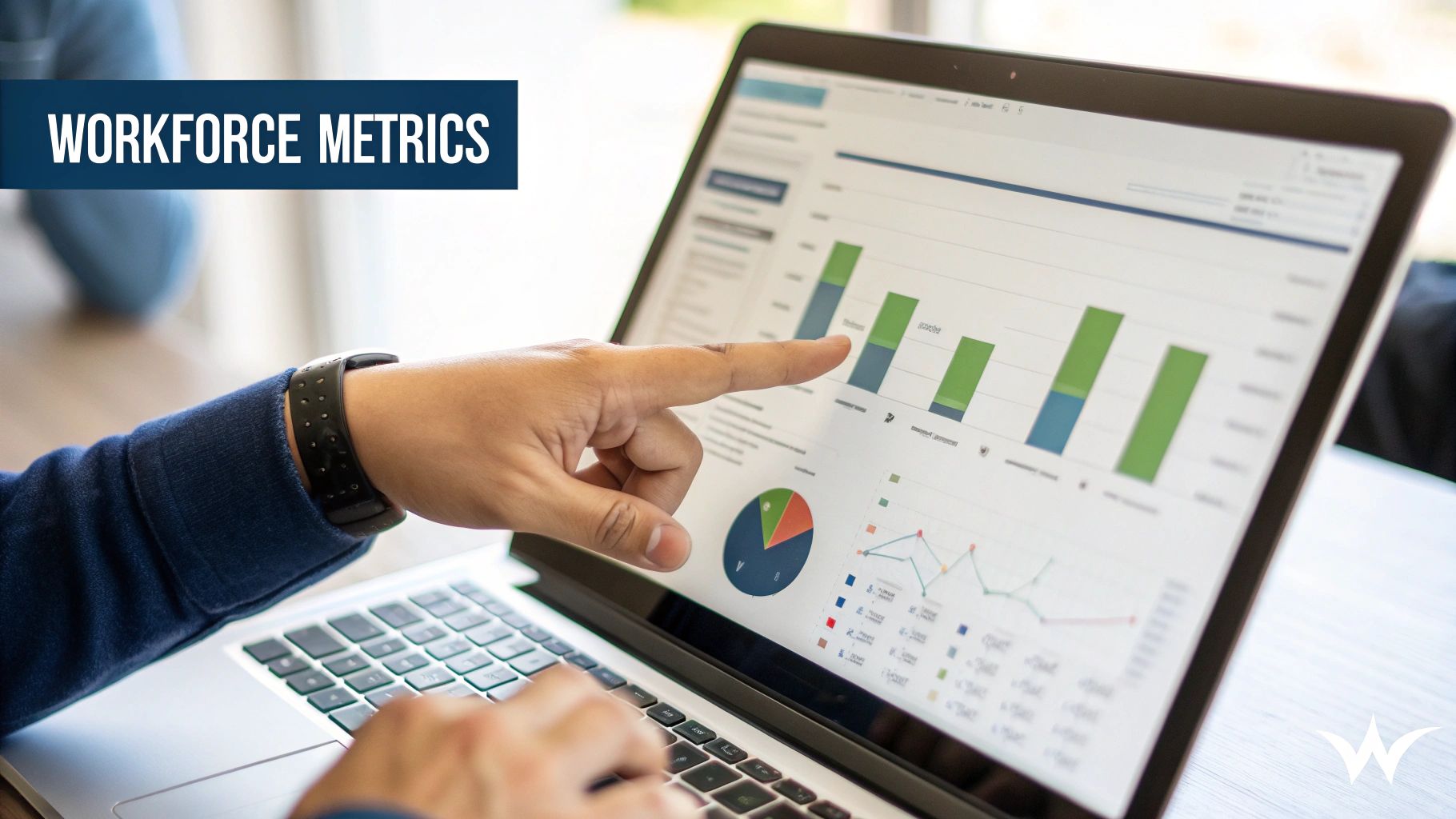
Unilever uses predictive analytics to identify high-potential candidates and improve retention. Google’s people analytics team uses data to inform nearly every HR decision, from optimizing team structures to defining the traits of effective managers. These companies treat their workforce data as a critical asset.
Why this is a key workforce planning strategy
Without robust analytics, workforce planning is reactive and prone to errors. A data-driven approach provides objective insights that guide strategic decisions and justify investments. It allows leaders to move beyond gut feelings and answer critical questions with evidence, like "Which department is at the highest risk of turnover?" or "What skills will we need in two years?"
Implementation Steps
- Identify Key Metrics: Focus on impactful metrics like quality of hire, time-to-productivity, and employee lifetime value.
- Establish Data Governance: Implement clear policies for data collection, privacy, and security.
- Invest in Data Quality: Ensure data is accurate and consistent at its source, whether from an HRIS, ATS, or performance management system.
- Build Cross-Functional Teams: Combine expertise from HR, finance, and operations to interpret the data.
- Automate Reporting: Use dashboards and automated tools for routine reporting, freeing up analysts to focus on deeper insights.
Key KPIs:
- Employee Turnover Rate (Voluntary and Involuntary)
- Quality of Hire
- Time-to-Productivity
- Employee Engagement Score
- Cost-per-Hire
Leveraging Endpoint Analytics with WhatPulse
WhatPulse enhances your workforce metrics by providing objective, privacy-first data on tool usage and digital productivity. By analyzing application and project time, you can quantify productivity benchmarks, identify burnout risks, and validate software skills needed for future hires. This endpoint data provides a granular layer of insight that traditional HR metrics miss.
7. Workforce Planning Technology and Systems Integration
Isolated systems and manual data entry are barriers to modern workforce planning. An effective strategy requires integrating technology platforms to create a single source of truth. This involves connecting your Human Resources Information System (HRIS), Applicant Tracking System (ATS), and performance management tools into a cohesive ecosystem. The goal is to automate data flow and enable real-time visibility.
This integration allows a holistic view of the workforce. By connecting performance data from a tool like Lattice with your HRIS, you can identify high-potential employees ready for promotion, informing your succession planning. Integrating your ATS with financial systems provides immediate insight into the cost-per-hire for different roles, helping you budget accurately.
Why this is a key workforce planning strategy
Without integrated systems, workforce data is fragmented and out-of-date, leading to decisions based on incomplete information. A connected tech stack transforms disparate data points into strategic insights, enabling predictive analytics and more agile responses to business changes. This is fundamental for any organization implementing advanced workforce planning strategies.
Implementation Steps
- Define Requirements: Document your data needs and establish clear ROI expectations for technology integration. Central to this is a robust HRIS implementation plan.
- Prioritize Integration: First, connect critical systems like your HRIS and financial software to ensure core data alignment.
- Plan a Phased Rollout: Implement the integration in stages to manage risk and gather user feedback.
- Establish Data Governance: Implement strict data quality assurance protocols and governance policies.
- Train and Support Users: Provide comprehensive training to ensure teams can use the new integrated system. You can learn more about the available options in our overview of workforce management software.
Key KPIs:
- Data Accuracy Rate
- Time Saved on Manual Reporting
- User Adoption Rate of New Systems
- Decision-Making Speed
Leveraging Endpoint Analytics with WhatPulse
Integrating technology is only half the battle; understanding its use is critical. WhatPulse offers endpoint analytics that reveal which software your workforce actually uses. This data can validate your technology investments. If your new performance management system shows low adoption, you can intervene with targeted training. If specific business intelligence tools are heavily used, it signals a need for more specialized analytical roles.
From Planning to Operating
The workforce planning strategies in this article are not isolated exercises. They are interconnected systems for managing your organization's talent lifecycle. Headcount planning defines your needs, skills gap analysis identifies what you lack, and succession planning prepares for future leadership. Each strategy feeds into the others, creating a continuous loop of assessment, action, and refinement.
Trying to implement all these strategies at once will fail. The most effective approach is to identify your most pressing business challenge. Struggling to fill technical roles? Start with a targeted skills gap analysis and a revised talent acquisition strategy. High employee turnover? Focus on retention programs and career development. The goal is to build momentum with a focused win.
Moving Beyond Theory: The Central Role of Data
Every strategy relies on accurate, real-time data. Without it, planning is guesswork based on outdated assumptions. You cannot manage what you do not measure. This is where the transformation from reactive HR to strategic workforce management happens.
Objective data removes bias from decision-making. It tells you which software licenses are actually being used, pinpointing cost savings. It reveals how much time engineers spend in meetings versus deep work, providing evidence to support workflow changes. It shows which teams are adopting new tools and which are struggling.
A manager might feel their team is overworked. Endpoint analytics can show that the team spends 30% of their time navigating a slow, legacy CRM system, identifying a clear bottleneck. This shifts the conversation from subjective complaints to objective problem-solving.
Activating Your Workforce Plan
Putting these concepts into practice requires a shift in mindset. Workforce planning is not a static report; it is a dynamic operational function.
Here are the immediate steps to take:
- Identify Your Primary Pain Point: Choose one or two strategies that address your biggest hurdle. This focused approach ensures early wins.
- Establish a Baseline: Before implementing any new initiative, understand your starting point. Use a tool like WhatPulse to gather objective baseline data on application usage and productivity patterns. This gives you a benchmark against which you can measure progress.
- Link KPIs to Business Outcomes: Track impact, not just activity. For a skills gap initiative, don't just measure training hours. Measure the reduction in time-to-hire for key roles or the increase in project velocity for upskilled teams.
- Iterate and Communicate: Treat your workforce plan like a product. Launch a pilot program, gather feedback, analyze the data, and refine your approach. Keep stakeholders informed with clear, data-backed reports.
Mastering these workforce planning strategies is no longer optional. It is the core mechanism for building a resilient, agile organization. By moving from abstract planning to data-driven operations, you build a workforce shaped for tomorrow.
Ready to replace guesswork with objective data? WhatPulse provides the privacy-first endpoint analytics you need to measure application usage, understand work patterns, and power your workforce planning strategies. See how your teams actually work and make decisions with confidence. Get started with WhatPulse.
Start a free trial