
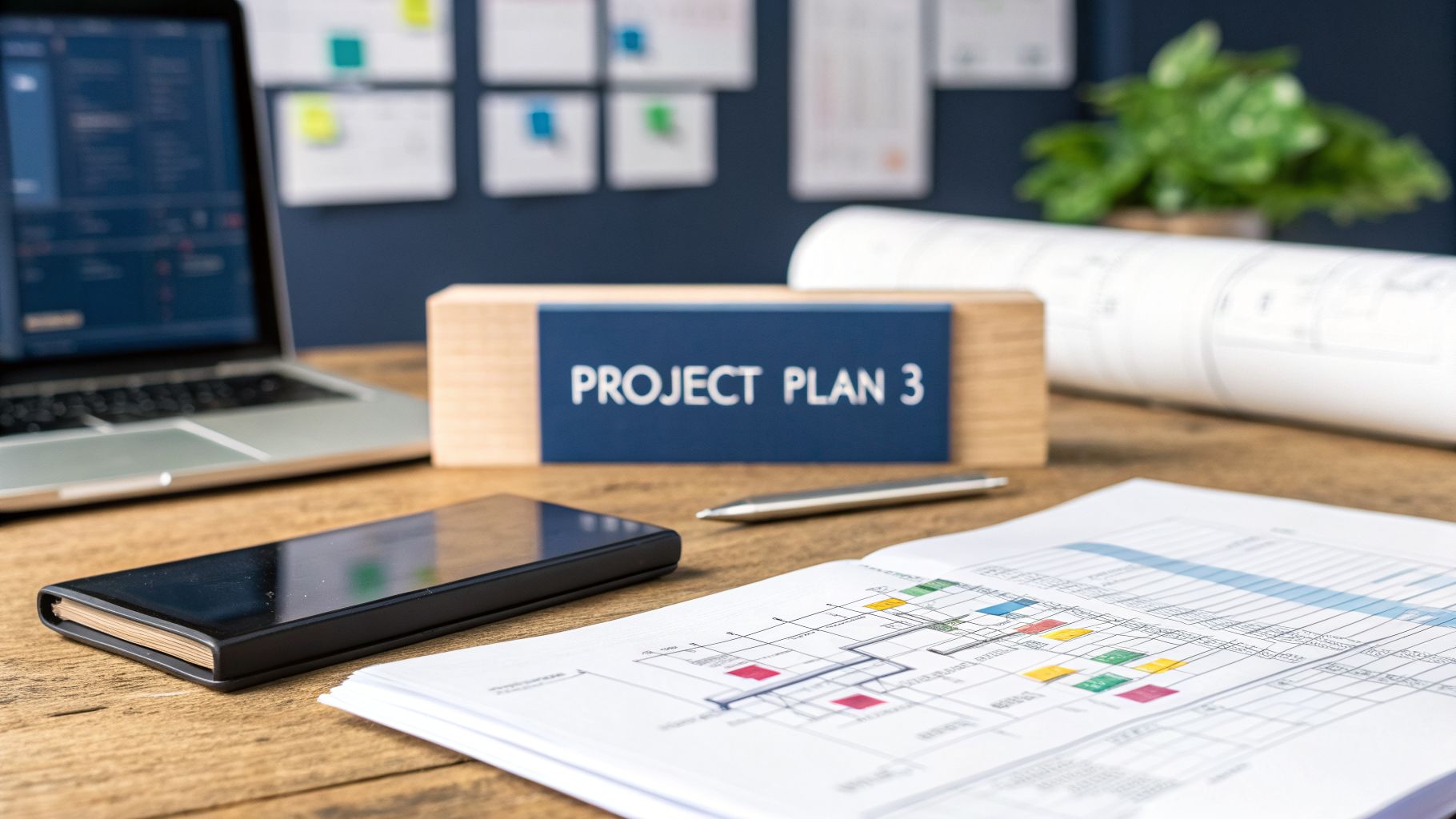
When your teams start juggling more than simple task lists, you need a tool with more muscle. This is where Microsoft Project Plan 3 comes in. It’s a cloud-based project management solution built for teams that need tools for managing resources and tracking projects.
It’s the middle ground—more than basic task tracking, but without the complexity of a full enterprise system.
What Is Project Plan 3?
Project Plan 3 is Microsoft’s mid-tier offering for project and portfolio management (PPM). It’s designed for organisations that have outgrown simpler tools like Project Plan 1 or scattered Excel sheets but don't need the top-down portfolio analysis found in Project Plan 5.
This plan gives project managers a proper toolkit. It’s not just about drawing up a timeline. It’s about figuring out who is available, assigning them effectively, and making sure the project stays on track.

What You Get in the Box
Project Plan 3 is a hybrid. It gives users access to two distinct, yet connected, environments.
- Project for the web: This is the modern, web-based tool for creating and managing projects. It’s useful for straightforward planning, day-to-day team collaboration, and getting quick status updates. This is the front-end that most of your team will use.
- Project Professional desktop app: This is the powerhouse. The classic, feature-packed desktop application is known for its deep scheduling engine, resource management, and complex reporting. It’s the tool for dedicated project managers who need to build schedules with dependencies and fine-grained resource assignments.
This dual approach is practical. You can run simpler projects entirely from your browser, while keeping the desktop app’s power in reserve for your most complex initiatives.
Project Plan 3 At a Glance
| Component | Description | Primary User |
|---|---|---|
| Project for the web | A modern, visual web interface for everyday project management. | Team members, accidental project managers |
| Project Professional | The classic, powerful desktop app for complex scheduling and resource control. | Dedicated project managers, schedulers |
| Resource Management | Tools to request, assign, and manage team member capacity and availability. | Project managers, resource managers |
| Roadmapping | The ability to create high-level, visual timelines that connect multiple projects. | Programme managers, leadership |
The plan provides different tools for different roles, all within a single licence.
The real advantage of Project Plan 3 is how it connects these two worlds. It bridges the gap between simple task management and heavy-duty project engineering, letting everyone on the team use the tool that fits their job.
Its Place in the Microsoft Universe
Project Plan 3 sits in the sweet spot between its siblings. It’s a major step up from Project Plan 1, which only provides the web interface and lacks resource management and the desktop app.
At the other end, it stops just short of Project Plan 5’s advanced portfolio optimisation and demand management. Those features are typically necessary only for large, centralised Project Management Offices (PMOs) doing strategic, top-down portfolio planning.
With the planned retirement of Project Online on 30 September 2026, many organisations are now looking at Project Plan 3 as the logical successor. It carries forward the modern experience of Project for the web while keeping the desktop features that many teams depend on. This makes it a key option for IT directors and procurement teams planning their next move.
Core Tools and Technical Capabilities
 When you move up to Project Plan 3, you get more than a web tool. You get the full Project Professional desktop application. This is the classic, heavy-duty software that seasoned project managers have depended on for years to handle complex scheduling and fine-grained control.
This is where you build the complex stuff. Think detailed dependencies, critical path management, and what-if scenarios. For a big infrastructure project, this means you can map out every phase—from the first site survey to the final system switch-on—and instantly see how a delay in one task ripples through the entire timeline.
Resource and Portfolio Management
A huge part of what makes Project Plan 3 a real step up is its resource management. This isn't just about assigning tasks. It’s about managing your entire team's capacity across a portfolio of projects.
You can formally request resources, check who’s available, and approve assignments from a central hub. An engineering lead, for example, can see which developers are over-allocated and shift work to someone with spare capacity. It’s a practical way to prevent burnout and keep multiple projects on track.
This feeds directly into portfolio management. With Plan 3, you can group related projects into portfolios to weigh them against your strategic business goals. This lets you prioritise the work that delivers the most value and push less critical projects down the list.
For many organisations, this is the first time they can move from a chaotic, "first-come, first-served" project intake to a structured way of choosing work that aligns with company goals.
Visual Roadmaps and Baselines
Another powerful feature is the ability to create visual project roadmaps. These are high-level timelines that pull multiple projects into one simple view. A product director could use a roadmap to show stakeholders the release schedule for three different software products over the next 18 months, without getting lost in the details of each project plan.
To measure performance, Project Plan 3 lets you set and save project baselines. A baseline is a snapshot of your original plan—the schedule, cost, and scope. As the project moves forward, you compare your actual performance against this snapshot to see where you're deviating.
On a construction project, if your labour costs are running 15% over the baseline budget halfway through, you have a data-backed reason to step in and make a change. Without a baseline, you’re just guessing.
The software also gives you tools for real-time progress tracking, like timesheets. Team members submit the hours they've worked on specific tasks, which feeds back into your project's cost and effort calculations. It’s a closed loop: plan the work, track the hours, and measure the difference. If you want to explore other options, our guide on project management software is a good place to start.
The real-world impact is clear. Data from Statistics Netherlands (CBS) showed that in 2024, 61% of engineering and DevOps teams in the NL region relied on Microsoft Project Plan 3 for rollouts, leading to a 37% faster software deployment cycle. And in 2025, 82% of product leads in Utrecht used Plan 3 roadmaps to evaluate hybrid work impacts, which boosted their on-time delivery from 64% to 91%.
How Different Teams Use Project Plan 3
 A list of features only tells you what a tool can do, not what it's actually good for. The real measure of software is how it holds up in the hands of different teams, each with its own problems.
Project Plan 3 isn't a silver bullet. Its strength is how different roles can shape its capabilities to fit their world. An IT director sees a central control panel, while a finance manager sees a detailed cost ledger. This flexibility moves it from a simple task manager to a core part of a company’s operations.
For the IT Director Managing Rollouts
IT directors are often responsible for large, high-stakes projects like company-wide software deployments or hardware refreshes. Their biggest headaches are visibility and control. Without a clear view of who is available and how tasks are connected, upgrading 5,000 endpoints to Windows 11 can quickly become chaotic.
Project Plan 3 gives them the oversight they need. A typical workflow looks like this:
Create a Portfolio: The director bundles all related projects into a single portfolio, like "2026 Hardware Refresh." This provides a top-level dashboard to check the health of the entire initiative.
Plan Resources: Using the resource management tools, they can see which technicians are assigned to which sites. This helps prevent burnout and spot bottlenecks before they derail the project. If the Amsterdam office deployment starts to slip, they can instantly see which engineers have the capacity to help.
Set a Baseline and Track: At the start, they lock in a baseline for the project’s schedule and budget. As work progresses, they can measure actuals against this baseline, which is the kind of hard data stakeholders want to see. If costs creep 10% over budget, they can drill down and find which phase is causing the problem.
This structured approach is becoming the norm. In the Netherlands, adoption of Microsoft Project Plan 3 among mid-sized firms jumped by 45% between 2022 and 2025 as it becomes a go-to for managing software assets. The retirement of Project Online is also pushing this shift, with NL firms already moving 78% of their portfolios over to Plan 3’s web-based platform. You can read more on the history and evolution of Microsoft Project on Wikipedia.
For the Engineering Lead in an Agile Environment
An Engineering Lead lives in a different world of complexity. Their days are filled with development sprints, dependencies between teams, and trying to figure out if anyone is using the new tools they’ve rolled out. They need a way to map the work between the front-end, back-end, and DevOps teams all pushing for the same product release.
With Project Plan 3, the lead can link specific tasks across different project plans. If the API development task in the back-end team’s plan is delayed, the front-end team's plan automatically shows the knock-on effect on their timeline. This removes the need for someone to manually connect the dots during daily stand-ups.
They also use it to track the adoption of new developer tools. By setting up a project to manage a new IDE rollout, they can assign training tasks and monitor how many people have completed them. When they combine that plan with real-world usage data from a tool like WhatPulse, they get a complete picture of the plan and the reality of its adoption. You can learn more about how tracking time spent on projects delivers a clearer view of software usage.
For the Finance Manager Tracking Budgets
For a Finance Manager, it all comes down to the bottom line. They see Project Plan 3 as a way to tie project activity directly to financial results. By using its timesheet and resource-costing features, they can get an accurate, near real-time picture of project spend.
When a project is created, every person—from a senior developer to a junior analyst—is assigned a cost rate. As team members log their hours against tasks, the system automatically tallies up the actual labour cost. The finance manager can then run reports comparing the budget to actuals, pinpointing any differences. This data isn't just for looking back; it’s useful for forecasting and helps them optimise future project budgets based on real performance, not just guesswork.
Choosing The Right Tier: Plan 1 vs. Plan 3 vs. Plan 5
Trying to pick the right Microsoft Project plan can feel like a guessing game. Getting it wrong costs you—either in features you pay for but never use, or by hitting a wall with a tool that’s too basic when your projects get serious.
It’s not about picking the most expensive option. It's about matching the tool to the job.
Think of it this way: Plan 1 is your digital whiteboard for simple timelines and task lists. Project Plan 3 is your command centre, giving you the power to see who’s working on what, how much it’s costing, and how all your projects connect. Plan 5 is the strategic boardroom, helping you plan your entire portfolio for the years ahead.
To make the right call, you need to look past the price tag and get honest about the problems you’re trying to solve.
The Entry Point: Plan 1
Project Plan 1 is where most small teams and individuals start. It gives you the clean, web-based Project for the web interface, which is great for laying out project timelines, assigning tasks, and tracking basic progress.
You'll feel its limits quickly. There are no resource management tools, no timesheets, and you don’t get the Project Professional desktop app. If all you need is a visual way to see tasks on a timeline, it works. The moment you need to know if your team is overbooked across three different projects, you’ve outgrown it.
The Power User's Choice: Project Plan 3
This is where serious project and portfolio management begins. Project Plan 3 is the go-to for most organisations that depend on delivering projects on time and on budget. It rolls in everything from Plan 1 and adds the features for deep control.
- Resource Management: This is the game-changer. You can build a central pool of people, see their availability, and formally assign them to work. An engineering lead can actually answer, "Who's free to jump on this urgent new client request?"
- Project Professional Desktop App: You get the full-featured desktop client. This is a must-have for building complex project schedules with tricky dependencies, setting baselines to track performance, and doing detailed cost analysis.
- Portfolio Management: It lets you start grouping projects into portfolios, giving you a high-level dashboard to check on health and make sure your work is aligned with bigger business goals.
You jump to Project Plan 3 when your focus shifts from managing tasks to managing the resources, budgets, and strategic value of your projects. If you’re currently wrestling with complex schedules in spreadsheets, our guide on project planning on Excel highlights why so many teams make this leap.
The Enterprise Solution: Plan 5
Project Plan 5 takes the power of Plan 3 and adds two specialised capabilities: demand management and portfolio optimisation. These aren’t everyday project tools; they are strategic instruments built for large, mature Project Management Offices (PMOs).
Demand management helps you formalise the process of new project ideas and requests. Portfolio optimisation uses algorithms to help you pick the right mix of projects to fund, based on your budget, resource limits, and strategic priorities. It’s for organisations making multi-million-dollar decisions on which big initiatives get the green light.
For a wider look at how these tiers fit into Microsoft’s overall offerings, this guide on choosing from Office 365 all plans provides some useful context.
Microsoft Project Plans Feature Comparison
Here’s a direct comparison of what each plan offers.
| Feature | Project Plan 1 | Project Plan 3 | Project Plan 5 |
|---|---|---|---|
| Project for the web | Yes | Yes | Yes |
| Project Desktop App | No | Yes | Yes |
| Resource Management | No | Yes | Yes |
| Timesheets | No | Yes | Yes |
| Portfolio Management | No | Yes | Yes |
| Demand Management | No | No | Yes |
| Portfolio Optimisation | No | No | Yes |
| Ideal User | Individuals, Small Teams | Project Managers, PMOs | Enterprise PMOs, Strategists |
This table shows the step-up in capability at each level. Plan 1 is for task management, Plan 3 is for full-scale project management, and Plan 5 is for enterprise-level strategic planning.
Understanding the True Cost and Security of Project Plan 3
When it comes to new software, the decision often boils down to two things: what it costs and whether it’s secure. With Project Plan 3, the pricing looks simple on the surface. It’s a straightforward per-user, per-month subscription.
This fee gets each person access to both Project for the web and the classic Project Professional desktop app. Each licence covers installation on up to five devices. This is a plus for project managers who jump between a desktop in the office, a laptop in meetings, and a machine at home.
Getting Smart About Licensing and Costs
Because it’s a subscription, the cost lands in your operational budget (OpEx), not as a big upfront capital expense (CapEx). Your finance team will appreciate that. But just paying the monthly fee isn't the whole story. Real cost control comes from making sure the licences you're paying for are actually being used.
This is where usage data becomes a financial tool. We saw this trend in the Netherlands between 2020 and 2025, where Project Plan 3 adoption among digital transformation managers went up by 52%. A 2023 KPMG NL study drove the point home: projects using Plan 3 without analytics overran their budgets by an average of 27%. When teams brought in a tool like WhatPulse to see what was happening, that overrun fell to just 11%.
The financial impact was significant. Finance departments in the study cut their software spending by an average of 31%. For a company with 500 users, that meant saving around €450,000 a year just by finding and reassigning licences that were sitting idle. You can dig deeper into Microsoft Project's capabilities and licensing details on the UW.edu site.
The link between usage data and your budget is direct. You can’t manage costs you can’t see. Knowing who relies on the desktop app versus the web client helps you target training and make smarter renewal decisions.
How Project Plan 3 Inherits Microsoft’s Security
When you choose Project Plan 3, you're not just getting a project tool. You're plugging into the Microsoft 365 security and compliance ecosystem. For any IT leader worried about data protection, this is a big advantage.
The service automatically benefits from Microsoft’s security measures, covering threat management, access control, and information protection.
For any business in the European Union, data residency is non-negotiable. Microsoft offers EU data residency, which means your project data stays within EU data centres, helping you meet GDPR requirements.
- Data Residency: All your core project data—plans, resource lists, and timesheets—is stored at rest in your chosen region. For EU companies, that means it stays inside the EU.
- Compliance Certifications: The platform is covered by a long list of global standards, including ISO/IEC 27001 and SOC 1, 2, and 3 reports. This saves you paperwork.
- Data Protection: You can extend security features you already use, like data loss prevention (DLP) policies and sensitivity labels from Microsoft Purview, to all your project files and messages.
This built-in security framework means you don't have to vet a new, standalone tool from scratch. You’re building on a foundation that's already audited and trusted by thousands of companies, freeing you to focus on delivering projects, not managing infrastructure.
Your Decision Checklist for Project Plan 3
You’ve seen what Project Plan 3 can do. Now, figure out if it’s the right tool for your organisation. This is a gut-check to see if the plan solves your specific problems.
This decision tree boils it down. If your main headaches involve managing team capacity, creating strategic views, or tying costs back to actual work, then you’re on the right track.

If your needs centre on resource management, strategic roadmaps, and budget control, Project Plan 3 is a serious contender.
For the IT Director
As an IT Director, you’re thinking about control, security, and how this fits into your existing tech stack. You need tools that integrate smoothly and don't create new silos. Ask yourself:
- Resource Management: Do you constantly struggle to allocate technicians or engineers across multiple projects? Is knowing who’s available and who’s overbooked a persistent problem?
- Integration: Is native integration with the Microsoft 365 ecosystem a non-negotiable? Think seamless connections to Teams and Power BI.
- Control: Do you have complex projects where you need the granular control of a desktop app to manage critical paths and schedules?
If you found yourself nodding along, Project Plan 3 is designed for these scenarios. It gives you the oversight to manage large-scale deployments and keep the tech stack coherent.
For the Product Lead or Engineering Manager
Your world is all about shipping on time, managing dependencies, and showing progress to stakeholders. The question is whether your current task board is holding you back.
- Roadmapping: Do you need to build and share visual roadmaps that communicate your strategy without dragging executives through daily tasks?
- Baselines: Is it necessary to lock in a project baseline—scope, schedule, and cost—and then track how your team is performing against that original plan?
- Dependencies: Are you coordinating work across several teams where a slip in one area causes a domino effect of delays for everyone else?
A "yes" to these questions is a strong sign you've outgrown simpler tools. Project Plan 3 gives you the structure to manage complex development cycles without losing the big picture.
For the Finance or Procurement Manager
Your job is to make sure money is being spent wisely. You need to connect the dots between budget, time, and results.
Do you need to directly link project costs to resource time and hours logged? Is tracking your budget against actual spend a painful, manual process right now?
If you’re struggling to get that financial clarity, the timesheet and resource costing features in Project Plan 3 are what you're missing. It turns your project data into a financial accountability tool.
Finally, there’s a critical deadline to consider. Microsoft is officially retiring Project Online on 30 September 2026. If your organisation is still using it, you don't have a choice anymore—you have a deadline. Starting your evaluation and migration planning now is essential.
Frequently Asked Questions
Here are the practical, in-the-weeds queries we hear from teams trying to figure out how Project Plan 3 will fit into their day-to-day work.
Can I Integrate Project Plan 3 With Other Microsoft Tools?
Yes, and this is one of its biggest strengths. Project Plan 3 was designed to live inside the Microsoft 365 world. The connections to other tools are built in.
- Microsoft Teams: You can pin an entire project plan directly into a Teams channel. Your team can see tasks, update their progress, and have conversations right where they’re already collaborating, without having to jump to another app.
- Power BI: You can pull your Project Plan 3 data into Power BI. This lets you build custom dashboards to track anything from resource availability across all your projects to how a single project is tracking against its budget.
These aren't just technical integrations; they’re how you make project management a natural part of your team's workflow.
What Happens To My Data When I Migrate From Project Online?
This is a big question, especially with the retirement of Project Online happening on 30 September 2026. Your data doesn't vanish, but moving it requires a plan.
The migration process involves moving your project plans, resource pools, and other associated data from the older Project Online environment to the newer Project for the web model. Microsoft provides migration tools and detailed guidance for this transition.
Think of it less as a "copy and paste" and more like moving house. It’s an opportunity to declutter. Not every old feature has a direct equivalent in the new, more modern setup. Take the time to archive old, completed projects and clean up your data before you start. A clean slate makes the whole process run more smoothly.
Does Project Plan 3 Work For Agile Teams?
Yes. This isn't just a tool for old-school waterfall projects with rigid, long-term plans. Project Plan 3 is built for how modern teams work, which is often a mix of Agile, waterfall, or something in between.
You can manage your work using several different views:
- Task Boards: This is your classic Kanban-style board. It’s perfect for teams running sprints or managing a continuous flow of tasks, letting you drag and drop work between columns like 'To Do', 'In Progress', and 'Done'.
- Sprints: The tool has dedicated features for sprint planning. You can group work into specific, time-boxed iterations, assign tasks, and track progress for each sprint cycle.
- Hybrid Models: You can have the best of both worlds. A project manager might lay out the major project phases in a high-level Gantt chart, while the delivery team organises their day-to-day work on an agile task board.
This flexibility means different teams can use the methods that make sense for them, all while reporting into the same central project plan.
Ready to gain real visibility into your team's project work and software usage? WhatPulse provides the privacy-first analytics you need to optimise resources and make data-driven decisions. Discover how work actually happens at https://whatpulse.pro.
Start a free trial